Showing posts with label Design Thinking. Show all posts

Sunday, 1 April 2018

It all Starts Now. Key Change in my Professional Practice.


Coming to the end of my Mindlab journey is bittersweet in many ways. I feel a sense of achievement but also know that this is where I really take what has been learned and continue to grow from here.

What:
There are many things that have stood out over this learning journey, with a culmination of many changes impacting my professional practice, but possibly one of the biggest shifts for me has been the way I view and act out my role as a facilitator of teaching and learning in the classroom. So, (typical to me!) I have chosen to evaluate that change in relation to a combination of one element from the Hack Education (Parsons, Lynch, Han & Thorn. 2017) research- Future Focus, with one of the Ministry of Education (nd) Standards for the Teaching Profession- Learning Focused Culture.

Elaboration of the Learning Focused Culture Standard. Ministry of Education (nd).
Now what: evaluate the identified change
When teachers, or other professionals, critically evaluate their practice the use of a framework can be an effective tool to help identify and facilitate further change. The Cycle of Experiential Learning, recommended by Osterman and Kottkamp (2015, p.70), is what I will use during this evaluation. It is important to note that this process was not as neat or as orderly as it is presented here 😊.

Experiential Cycle stageAnalysis of
My role as a facilitator of teaching and learning in the classroom.
Relation to
Future Focused concept and
Learning Focused Culture Teaching standard
Problem Identification:
What was the problem? What drove me to make the change?
In my classroom I had noticed through the introduction of the ITL research (2012) collaboration rubric that although my students were cooperative they were not be being collaborative. If there were no behaviour issues, students were speaking nicely, taking turns and being respectful I had thought they were being collaborative. I was deciding on roles for students to undertake during the learning process also.In order for quality and effective teaching and learning to take place students were behaving well but being quite passive recipients in their learning. Who was really owning learning? Was there much risk taking going on? Was diversity and the unique contribution all learners bring to the table, really being valued?
For learning to be sustainable and future focused students need to be agentic.
Observation and Analysis:
What data is gathered?
What insights did I gather about the problem that drove change?
Both myself and my awesome trusty colleague worked together to develop collaborative skills in PE and in Inquiry. We took this time to sit back, and once given tasks to students, observed what the students were doing. How were they being collaborative? How was driving the learning? What changes were being made and when? Who were the contributors? Who made decisions that moved learning forward? Who didn’t do these things? Why?
This was really insightful and through our observations, surveying students and other formative assessment methods we came to see that students found it very difficult to drive their own learning. They were very careful in not making ‘mistakes’ or putting themselves out there in from of their peers, they were hesitant in making their own way- which we believe is essential and at the heart of learning.
During this time as well it became really important to see the supportive and collegial role my colleague and I were providing for each other and undertaking also. Our collaboration was visible and tangible for our students to see.
The concept of preparing students for an unknown future and equipping them with the skills and experiences in which to be risk takers and to drive their own learning became more and more obvious through this stage. Were we really providing learning opportunities in which our students were able to flex their cognitive and skill building muscles? If we didn’t provide these opportunities we ran the risk of maintaining the status quo which we felt would be a disservice to our students.
Of huge concern for our students at this time because of their age group (12-13 yrs) was the idea that to be an effective learner is to be vulnerable- many of our students were just not ready for this and this needed to be carefully managed. In creating and maintaining a positive and safe environment for learning children need to feel safe- not just physically but also emotionally. This needed to be catered and planned for.
Abstract
Re conceptualisation:
What new learning theories or research provides useful background to implement change?
What other perspectives be relevant to consider?
During this time we researched and designed learning activities that focused on students developing skills in context. The focus of setting the purpose for learning, the ways in which we all could be effective learners became of paramount importance. We then handed over the decision making process to the students. We could see the integration of the skills, the interactions leading to risk taking, choice making and collaboration in our classes.An effective learning environment is one in which students are given the opportunity in which to be agentic. Together in our classrooms we were all learners- none of us had ever set up, planned or designed a web based television episode before. Students were reflective and able to identify their own next learning steps- ones that would be relevant and useful to them in the future. We were working with individual strengths but collaborating across classes, digitally. We were reaching out to our community and involving them in the process. We began to see a change in reluctance as students began to take over their learning.
Active Experimentation:
What new strategies or ideas you have tried to implement in your practice? What have you learnt from the change/ experience?
What did I learn? I learnt that I didn’t need to direct and take the lead in the classroom; my students were more than capable of doing that for themselves. I had to let the reins go but that it was definitely not a free for all situation. The time effort and structure put in at the start led to the students feeling safe enough to take risks and move their own learning forward. Researching and investigating, design thinking practices and students’ agency over this time period has allowed us to have the confidence to know what we are doing is not just based on a whim or the next faddy thing out in education.Our next learning step for our new group of students is to now work on establishing design thinking as a delivery method for student learning. We are building on agency, future focus, and creating problem solving, risk takers. All of which need to be fostered in an environment that has learning and growth at its heart. We have lots of opportunities to work with each child and grow their own strengths.
We hope that these skills and the experiences they have will equip them for their futures, and that these skills will be sustainable and relevant in these futures as they find and solve problems they may face.

What next:
I want to continue to grow my professional practice. I am really aware of the need to maintain critical reflection and ensure what is happening in the classroom will equip my students for their future and build their learning capacity. I know that I truly value collaborative teaching approaches and see that teacher collaboration is vital in the progression of my teaching and learning programmes. Essentially I have learned that I can not do the thinking for my students, that they have to be given the opportunity to solve their own problems and be the agents of their own learning. I will continue to embed ICT into all my learning but know that this is an area I can really look into more next. I have HEAPS to do! 
I will try my best to continue to grow and I will always be a learner.

References:

ITL Research. (2012). 21CLD Learning Activity Rubrics. Retrieved from https://education.microsoft.com/GetTrained/ITL-Research

Ministry of Education (nd). Our code, our standards. Retrieved from https://educationcouncil.org.nz/content/our-code-our-standards

Osterman, K. F., & Kottkamp, R. B. (2015). Reflective practice for educators : professional development to improve student learning.(2nd ed.) New York: Skyhorse Publishing.

Parsons, D., Lynch, J., Han, B., & Thorn, R. (2017). Hack Education: Crowd Sourcing the future of education in New Zealand. In Spaces and Pedagogy: New Zealand Tertiary Learning and Teaching Conference Proceedings 2017. Auckland, New Zealand: EPress.

Road sign Future [Digital image]. (2017). Retrieved April 2, 2018, from https://pixabay.com/en/roadsign-future-way-sucess-2570954/ 

Tuesday, 12 December 2017

Getting there. (Yes, finally!!!) - Research in Education

Oh wow! I have worked my little brain off this morning.

It was with some trepidation that I started my Week 20 Mindlab work today. The LOOMING question was: how to narrow down and focus on one idea for my teacher inquiry project and the up and coming literature review?
In last week's blog I recorded so many possibilities for my teacher inquiry that my head was spinning. So... after watching all the videos and reading (most of 😇) the readings, in a roundabout way I have come back to two key features I am REALLY interested in exploring and applying in my practice, that I had recorded in last weeks blog:

Design Thinking in education and Learner Agency.

I fell across Core education's website regarding top ten trends in Education for 2016 and 2017 and after a morning of scribbling down ideas and processing my thoughts, am really excited about how I can combine these ideas together to benefit my students and their learning for next year's class.

My beginning scrawlings.
Getting closer!


So why have I chosen to focus on these areas?

During my Mindlab experience for last year, my colleague and I created a learning unit where the students (after a lot of teaching and preparation) created and designed a digital television episode that they shared with our families. In that, I really got to experience students having and taking ownership of their learning, some elements of design thinking, experiencing the 'messiness' of learning and not rescuing students from finding their own solutions to problems.

At the heart, though I would like to explore learner agency more, helping kids have the mindset that it's okay to not have the answers, to fail and to persevere with their learning. I want to look at who really owns learning- who comes up with what is to be learned and why? I want to look at learner engagement over entertainment, as I see a bit of that going on and have probably been guilty of this myself at times. Something one student in my class last year would do was rate the learning going on by it's fun-level. I could have used that as a learning opportunity but want to explore that with my students next year. How can students really use technology and create with it? Collaboration is real and tangible in our classrooms so how can we apply these ideas to a new classroom and continue to grow the collaborative skills in a new group of students

So to me, Design Thinking with its:
  • humanistic elements 
  • students and teachers learning alongside one another 
  • explorations of multiple perspectives and collaboration 
  • creating and testing ideas
  • problem-solving focus  
  • future focus- 21st Century skills
is a great fit. I don't know enough yet but think this will work in beautifully with our school inquiry model. 

So what is my question at this stage?
Please feel free to comment and critique my question:

  • How can student/learner agency and engagement be fostered through Design Thinking?

Sunday, 22 October 2017

Catch Up Time: Again! Lessons about Staying On-task through Design Thinking

Last week's Mindlab Session found us partnered up to delve into the how we were going to be able to keep focused and on task after the course changes from face to face learning to more online learning. Woah, okay - something big and looming and isolating... or does it have to be?

I really enjoyed working with my partner and we found out we had a lot of similarities. Both of us are focused on doing our best as learners but also concerned with how we were going to remain motivated and be successful in a more independent working environment.
We delved deeper into what was really going on and for me my main issues surround:
  • being emotionally invested in my learning; choosing a topic that really inspires and challenges me
  • continuing the collegial support and challenge I have already received and find stimulating
  • remaining focused, on-task and productive, delaying gratification, rewarding completed tasks etc
How to manage these challenges is something that concerns me but now that we have really gone into some depth to explore them I feel I am more ready to work through these productively.


What I loved about last week's session- as well as allowing time to raise and talk about these issues, was the creativity that came with designing a prototype to combat these concerns. I consider myself to be pretty imaginative and creative so designing 'Ye Cup o Success' for my partner was so much fun.


Its a little hard to see but here are our groups' design prototypes (most of them). This was really challenging to create something to address an abstract notion but we managed to do it- with a lot of imagination, symbolism and a requirement for the viewer to stretch their thinking.


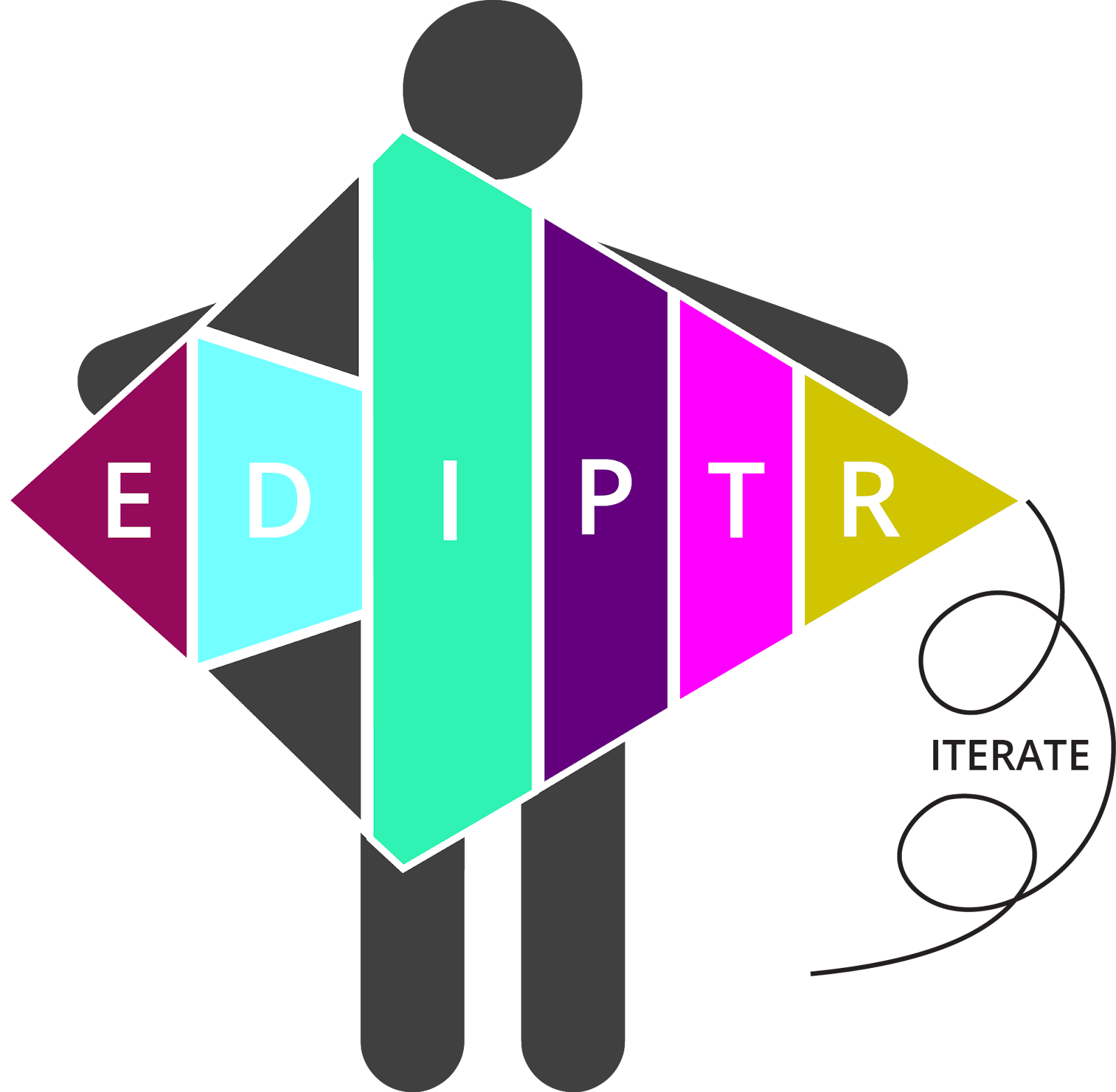
For this task, we used the Mindlab's Kite Design Model. It was a very structured and guided approach which I personally really liked. When sharing concerns or ideas, the listener really had to listen and interpret, what the speaker was saying. I think this is such an important skill and something our students (in fact all people) could benefit a LOT from developing more. But knowing how to listen, and having a real purpose for the listening is also important. Using the design model really helped to enable those skills. I will definitely be using something quite similar in my classroom in the future.


Design thinking by TMLU. The Mind Lab by Unitec Design Thinking Process + materials, which uses our 'kite' model: *Empathise *Define *Ideate *Prototype *Test *Reflect 


We were asked to reflect on the following question: 
How can design thinking be used to enhance students real-world problem-solving skills? 
  • The thing here for me is that students need to have authentic opportunities for applying real-world problem-solving skills in the first place. So this question arises in my mind- is it better to make up problems or create somewhat tenuous situations for students to solve or not to get students to do it at all? I think at least a contrived situation is better and exposes students to problem-solving situations, but also teachers perhaps need to allow students more opportnities to solve their own problems. Keep them local, keep them real, keep them relelvent. Do we always see those opportunities or do we rush in and solve problems for them before the students even realise they are able to solve them themselves.
  • After some authentic problems are identified- then yes ABSOLUTELY design thinking can provide a really structured and supportive framework to help students dig deeper into developing their problem solving ability. I love the empathetic aspect of the Mindlab's Kite design thinking model. The importance of listening to the problem and thinking of different ways to tackle the problem is really stressed in this model. 
  • IDEO's Human Centred Design resonates with me as well:
    • As you move through the human-centered design process, it doesn’t matter what you make, the materials you use, or how beautiful the result is, the goal is always to convey an idea, share it, and learn how to make it better. 
    • The focus is for design to get into the hands of the people who it will serve. Action based
    • Learn from failure- not knowing what the outcome will be- risk-taking
    • Empathise- put yourself in the shoes of the people you are designing for. Immerse yourself in that culture
    • Embrace ambiguity- by not knowing the answers, opening up to creativity and not 'racing' to be the 'first' 
    • Optimism- opening up to tackle those big problems. Embracing opportunities and believing that every problem is solvable
    • Iterate - do things over and over again to improve, create ideas etc
  • I think as human beings we can all develop ourselves through design thinking. Being humble and ready to change for the betterment of the whole world is a noble aspiration. 
  • We can and already do apply design thinking in our own teacher inquiries; for isn't this really just design thinking in action??
The Mindlab by Unitech Design. (nd). Unitech Design Thinking Process. Retrieved from: https://app.themindlab.com/course/release/1313-week-14-digital-design-thinking-in-the-classroom 
IDEO.org. (2015). The Field Guide to Human-Centered Design (1st ed.). Canada: IDEO.org. Retrieved from http://d1r3w4d5z5a88i.cloudfront.net/assets/guide/Field%20Guide%20to%20Human-Centered%20Design_IDEOorg_English-ee47a1ed4b91f3252115b83152828d7e.pdf 

It all Starts Now. Key Change in my Professional Practice.

Coming to the end of my Mindlab journey is bittersweet in many ways. I feel a sense of achievement but also know that this is where I rea...