I really enjoyed working with my partner and we found out we had a lot of similarities. Both of us are focused on doing our best as learners but also concerned with how we were going to remain motivated and be successful in a more independent working environment.
We delved deeper into what was really going on and for me my main issues surround:
- being emotionally invested in my learning; choosing a topic that really inspires and challenges me
- continuing the collegial support and challenge I have already received and find stimulating
- remaining focused, on-task and productive, delaying gratification, rewarding completed tasks etc
How to manage these challenges is something that concerns me but now that we have really gone into some depth to explore them I feel I am more ready to work through these productively.

What I loved about last week's session- as well as allowing time to raise and talk about these issues, was the creativity that came with designing a prototype to combat these concerns. I consider myself to be pretty imaginative and creative so designing 'Ye Cup o Success' for my partner was so much fun.
Its a little hard to see but here are our groups' design prototypes (most of them). This was really challenging to create something to address an abstract notion but we managed to do it- with a lot of imagination, symbolism and a requirement for the viewer to stretch their thinking.
For this task, we used the Mindlab's Kite Design Model. It was a very structured and guided approach which I personally really liked. When sharing concerns or ideas, the listener really had to listen and interpret, what the speaker was saying. I think this is such an important skill and something our students (in fact all people) could benefit a LOT from developing more. But knowing how to listen, and having a real purpose for the listening is also important. Using the design model really helped to enable those skills. I will definitely be using something quite similar in my classroom in the future.
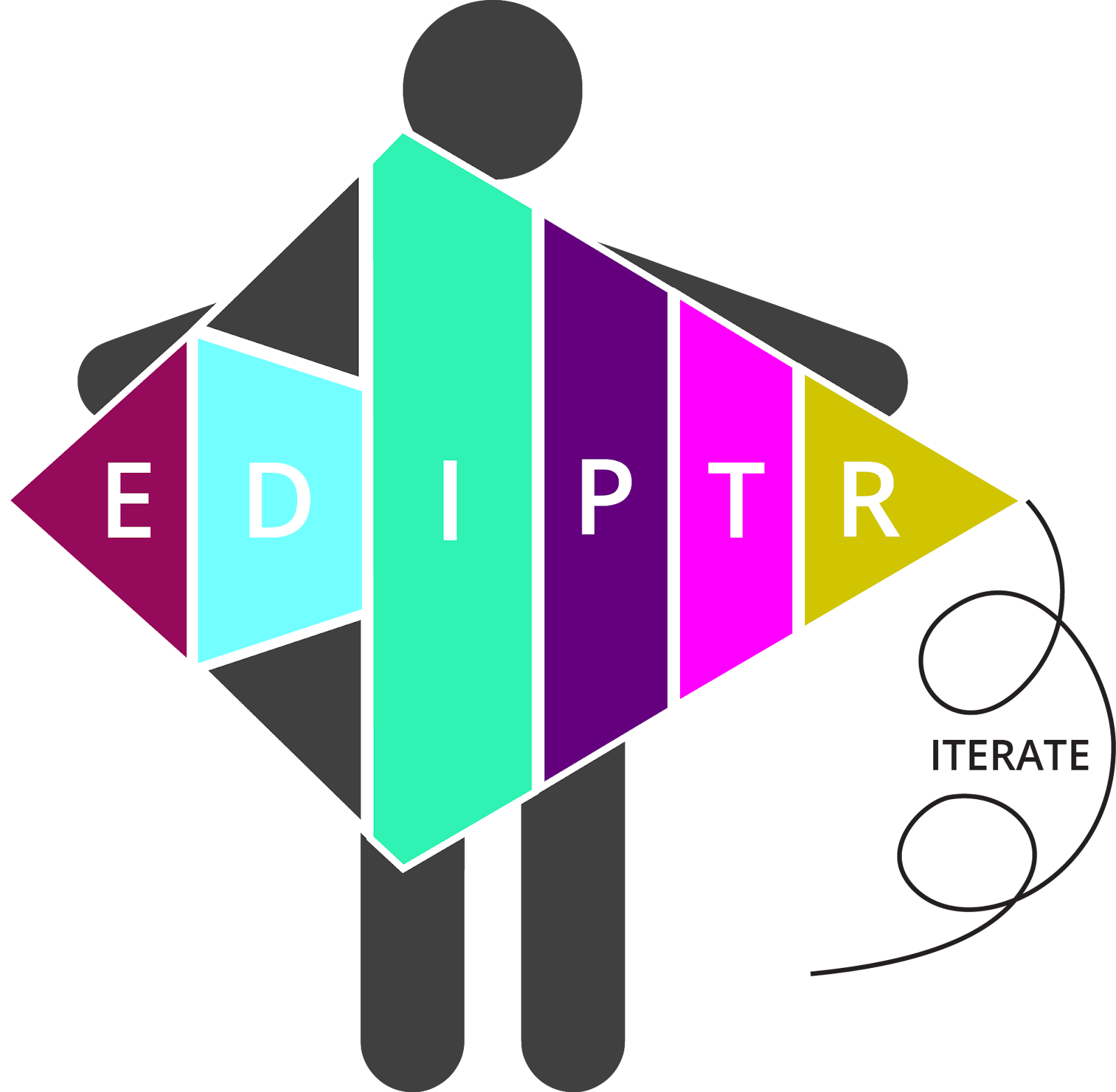 |
| Design thinking by TMLU. The Mind Lab by Unitec Design Thinking Process + materials, which uses our 'kite' model: *Empathise *Define *Ideate *Prototype *Test *Reflect |
We were asked to reflect on the following question:
How can design thinking be used to enhance students real-world problem-solving skills?
- The thing here for me is that students need to have authentic opportunities for applying real-world problem-solving skills in the first place. So this question arises in my mind- is it better to make up problems or create somewhat tenuous situations for students to solve or not to get students to do it at all? I think at least a contrived situation is better and exposes students to problem-solving situations, but also teachers perhaps need to allow students more opportnities to solve their own problems. Keep them local, keep them real, keep them relelvent. Do we always see those opportunities or do we rush in and solve problems for them before the students even realise they are able to solve them themselves.
- After some authentic problems are identified- then yes ABSOLUTELY design thinking can provide a really structured and supportive framework to help students dig deeper into developing their problem solving ability. I love the empathetic aspect of the Mindlab's Kite design thinking model. The importance of listening to the problem and thinking of different ways to tackle the problem is really stressed in this model.
- IDEO's Human Centred Design resonates with me as well:
- As you move through the human-centered design process, it doesn’t matter what you make, the materials you use, or how beautiful the result is, the goal is always to convey an idea, share it, and learn how to make it better.
- The focus is for design to get into the hands of the people who it will serve. Action based
- Learn from failure- not knowing what the outcome will be- risk-taking
- Empathise- put yourself in the shoes of the people you are designing for. Immerse yourself in that culture
- Embrace ambiguity- by not knowing the answers, opening up to creativity and not 'racing' to be the 'first'
- Optimism- opening up to tackle those big problems. Embracing opportunities and believing that every problem is solvable
- Iterate - do things over and over again to improve, create ideas etc
- I think as human beings we can all develop ourselves through design thinking. Being humble and ready to change for the betterment of the whole world is a noble aspiration.
- We can and already do apply design thinking in our own teacher inquiries; for isn't this really just design thinking in action??
The Mindlab by Unitech Design. (nd). Unitech Design Thinking Process. Retrieved from: https://app.themindlab.com/course/release/1313-week-14-digital-design-thinking-in-the-classroom
IDEO.org. (2015). The Field Guide to Human-Centered Design (1st ed.). Canada: IDEO.org. Retrieved from http://d1r3w4d5z5a88i.cloudfront.net/assets/guide/Field%20Guide%20to%20Human-Centered%20Design_IDEOorg_English-ee47a1ed4b91f3252115b83152828d7e.pdf
IDEO.org. (2015). The Field Guide to Human-Centered Design (1st ed.). Canada: IDEO.org. Retrieved from http://d1r3w4d5z5a88i.cloudfront.net/assets/guide/Field%20Guide%20to%20Human-Centered%20Design_IDEOorg_English-ee47a1ed4b91f3252115b83152828d7e.pdf


